The Slurm vs. Kubernetes decision should start with a week's worth of real workloads. Will students submit assignments that finish and release their GPUs, or will the college operate AI applications that need to remain available throughout the day?
Both platforms can allocate GPU resources, but their configuration and workload models differ. (Slurm GRES documentation, Kubernetes GPU scheduling documentation) Our recommendation is to choose the operating model that fits the institution's primary workload, then address exceptions deliberately rather than asking one tool to solve every problem.
Slurm vs. Kubernetes: start with jobs and services
A useful planning distinction is between work that completes and applications that remain available. For example, a model-training assignment might run for a defined period and produce an output file, while a campus application might need a model endpoint available for repeated requests.
Slurm exposes GPU requests through job-allocation tools such as sbatch, salloc, and srun, with GPU resources configured through its Generic Resource, or GRES, system. (Slurm GRES documentation) Kubernetes provides Jobs for tasks that run to completion and Deployments for managing application Pods and controlled updates. (Kubernetes Jobs, Kubernetes Deployments)
The practical question is not whether Kubernetes can run a batch job; it can. (Kubernetes Jobs) Ask instead which platform makes the college's most common activity easier to configure, support, and explain to faculty.
| Institutional workload | Recommended starting point | What to validate in a pilot |
|---|---|---|
| Scheduled class assignments with defined GPU requests | Evaluate Slurm first | Queue behavior, time limits, student access, and output retrieval |
| Research experiments that finish and release resources | Evaluate Slurm first | Allocation rules, reproducibility, and usable accounting records |
| Containerized applications with frequent updates | Evaluate Kubernetes first | Deployment procedures, service availability, and operating ownership |
| A mix of batch research and persistent AI applications | Evaluate separate resource pools | Whether the additional operational complexity is justified |
These are planning recommendations, not benchmark results. Test them against your workloads and the capabilities of the team that will maintain the environment.
Where Slurm fits an academic job workflow
Slurm can request GPUs by job, node, or task, subject to the configured scheduling plugins and resource definitions. (Slurm GRES documentation) Its accounting system can record job and job-step activity, while tools such as sacct and sreport support resource-use reporting. (Slurm accounting documentation)
For a teaching lab, we recommend using those capabilities to answer practical questions: Who submitted the work? Which resources were allocated? Did the job finish? Can the instructor understand the result without inspecting infrastructure logs?
Slurm also supports a configurable fair-share priority factor based on assigned shares and consumed resources. (Slurm multifactor priority documentation) Do not equate that mechanism with a finished academic access policy; decide explicitly how coursework, research, and other permitted activity should be prioritized.
Before selecting Slurm, ask the implementation team to demonstrate:
- Student access: Submission and output retrieval through the intended user interface.
- Resource control: A job that requests more capacity than the course permits.
- Classroom priority: Competing workloads during a scheduled lab.
- Recovery: A failed job, a clear explanation to the user, and a documented retry path.
- Reporting: A course-level report that reconciles to underlying job records.
A scheduler demonstration is not enough. The pilot should show that a student and an instructor can complete the entire teaching workflow.
Where Kubernetes fits an application workflow
Kubernetes Deployments support declarative application updates, replica management, and rollout or rollback procedures. (Kubernetes Deployments) GPU-enabled nodes require the relevant drivers and device plugins in the documented device-plugin approach, after which Pods can request the advertised GPU resources. (Kubernetes GPU scheduling documentation)
We recommend evaluating this model when your primary requirement is operating containerized applications, especially if your IT team already has a supported Kubernetes environment. A campus AI service should be assessed as an application: who releases changes, who monitors it, what happens during failure, and what users can expect when capacity is exhausted.
Kubernetes also supports parallel Jobs and retry behavior for finite tasks. (Kubernetes Jobs) Avoid dismissing it as “only for web services,” just as you should avoid selecting it solely because a software package arrives in a container.
Use a pilot to test service startup, a routine update, an unsuccessful rollout, and a node failure. Require the team to explain how GPU availability affects each event, rather than assuming application orchestration removes physical capacity constraints.
Neither scheduler is the complete institutional platform
Resource allocation is only one part of an educational deployment. Your requirements should also cover identity, course attribution, approved datasets, user-facing explanations, support ownership, and the handling of student or institutional records.
Separate operational accounting from financial policy. Slurm documents job accounting and resource-weighted billing units, but your institution must still define how those records translate into approved rates, statements, adjustments, or revenue distributions. (Slurm accounting, Slurm priority and billing weights)
Do not accept “we use partitions” or “we use namespaces” as the entire security answer. Ask for a documented design covering authentication, access enforcement, storage permissions, network boundaries, secrets, logging, and administrative access.
Use both only when the boundary is clear
A mixed architecture may be worth evaluating if the college has substantial needs on both sides. For example, you could propose one GPU pool for scheduled instruction and research and another for persistent applications.
Avoid allowing two independent schedulers to allocate the same GPU devices without a proven coordination design. Put responsibility for each resource pool, failure response, and usage record in writing before the pilot begins.
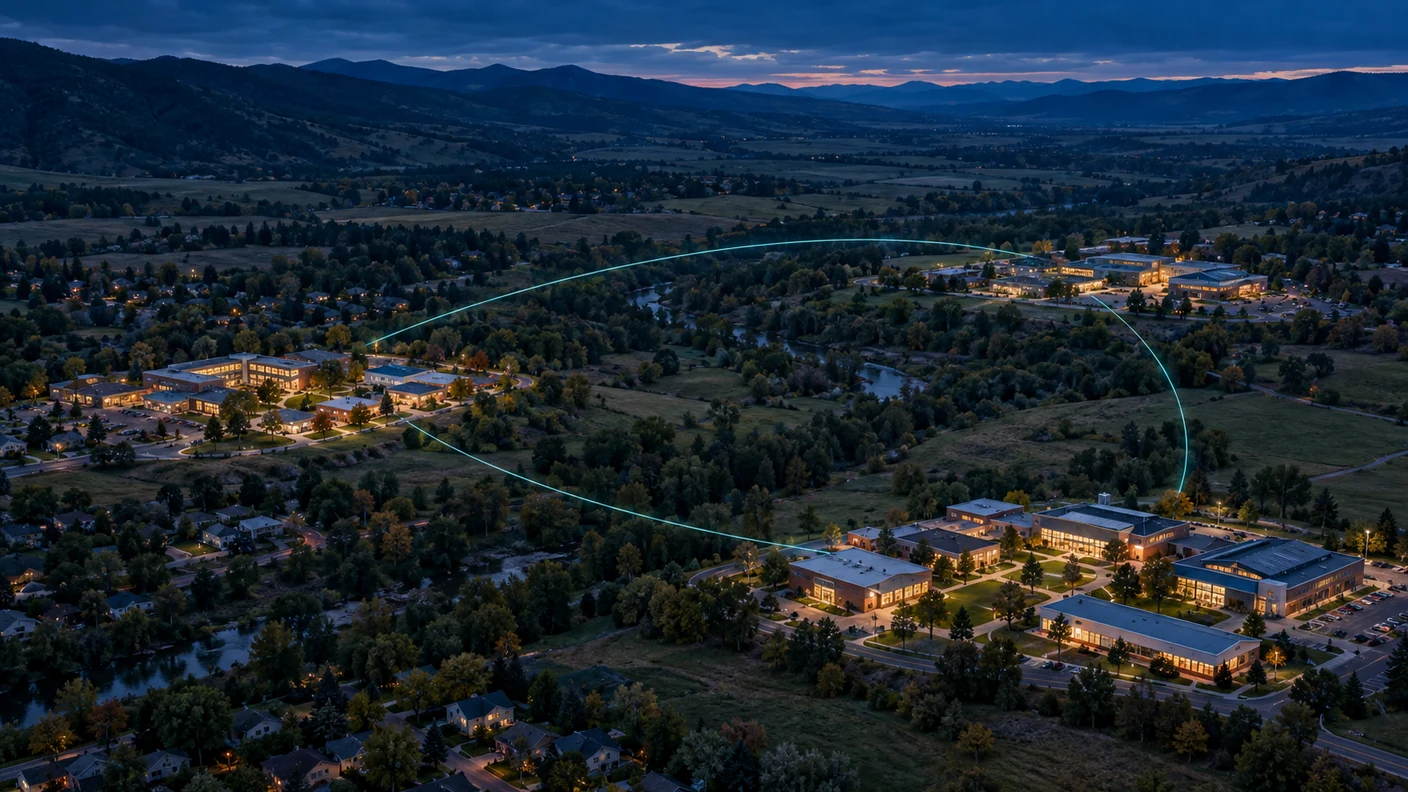
The same discipline applies across campuses: Slurm federation schedules sibling jobs across eligible clusters, then revokes the other copies when a cluster starts the job. (Slurm federation guide) Do not describe that as automatically combining geographically separate GPUs into one tightly coupled machine.
Choose against an acceptance checklist
Before committing to either platform, ask faculty and IT to agree on five outcomes: a student can start work, the right resources are enforced, important classes retain access, failures are understandable, and operations staff can support the system.
Civic Compute's 3COL platform combines Slurm orchestration with institutional access and usage-management workflows. For a prospective deployment, use a site-specific Slurm configuration reference to document how the chosen policies will be implemented and maintained.
Discuss your institution's GPU workload mix with Civic Compute. Bring examples of coursework, research jobs, and any persistent AI applications so the discussion starts with what users need to accomplish.
About the Author

Dan Golden, CSPO, MIT
Co-Founder & Partner, Engineering & Infrastructure
With over 30 years of experience in enterprise software design, implementation, management, and consulting, Dan is responsible for platform architecture, software infrastructure, and technical product leadership for the 3COL suite of applications. Dan has a Master of Information Technology from American Intercontinental University and is a Doctoral Candidate of Business Administration at Salem University. (About Civic Compute)